“Caducifolium”, debut collection by our alumni Laia Badia, makes its mark at Mercedes-Benz Fashion Week Madrid
Her proposal turned the Madrid runway into a circular fashion laboratory, showing that material research is a form of action.

The emerging talent runway Allianz EGO welcomed the national debut of Catalan designer Laia Badia, alumni of our Bachelor’s in Fashion Design, at this year’s edition of Mercedes-Benz Fashion Week Madrid — and did so to a packed house. Her collection, Caducifolium, was not only a statement of intent about the future of fashion, but tangible evidence that this future is already under construction.
A steady stream of press, industry professionals, and curious visitors filled the pre-show showroom, and the project generated enormous anticipation. Beyond any official recognition, Laia's real achievement has been opening an urgent and necessary conversation about today's productive ecosystem. The designer developed a proposal of 15 unisex looks (eight womenswear and seven menswear) from a research process that began in the laboratories of LCI Barcelona and was refined through purely artisanal methods in her home kitchen.
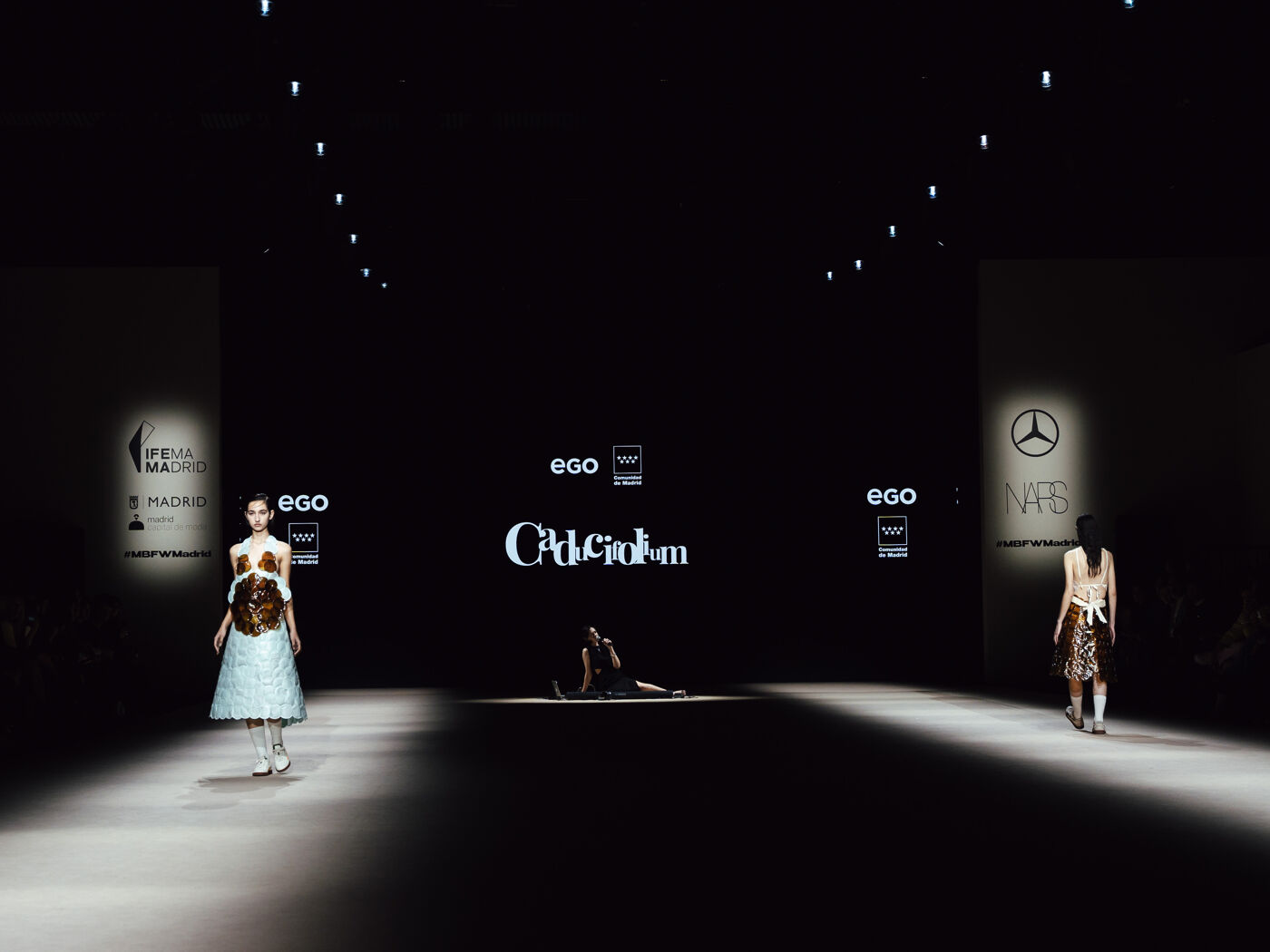
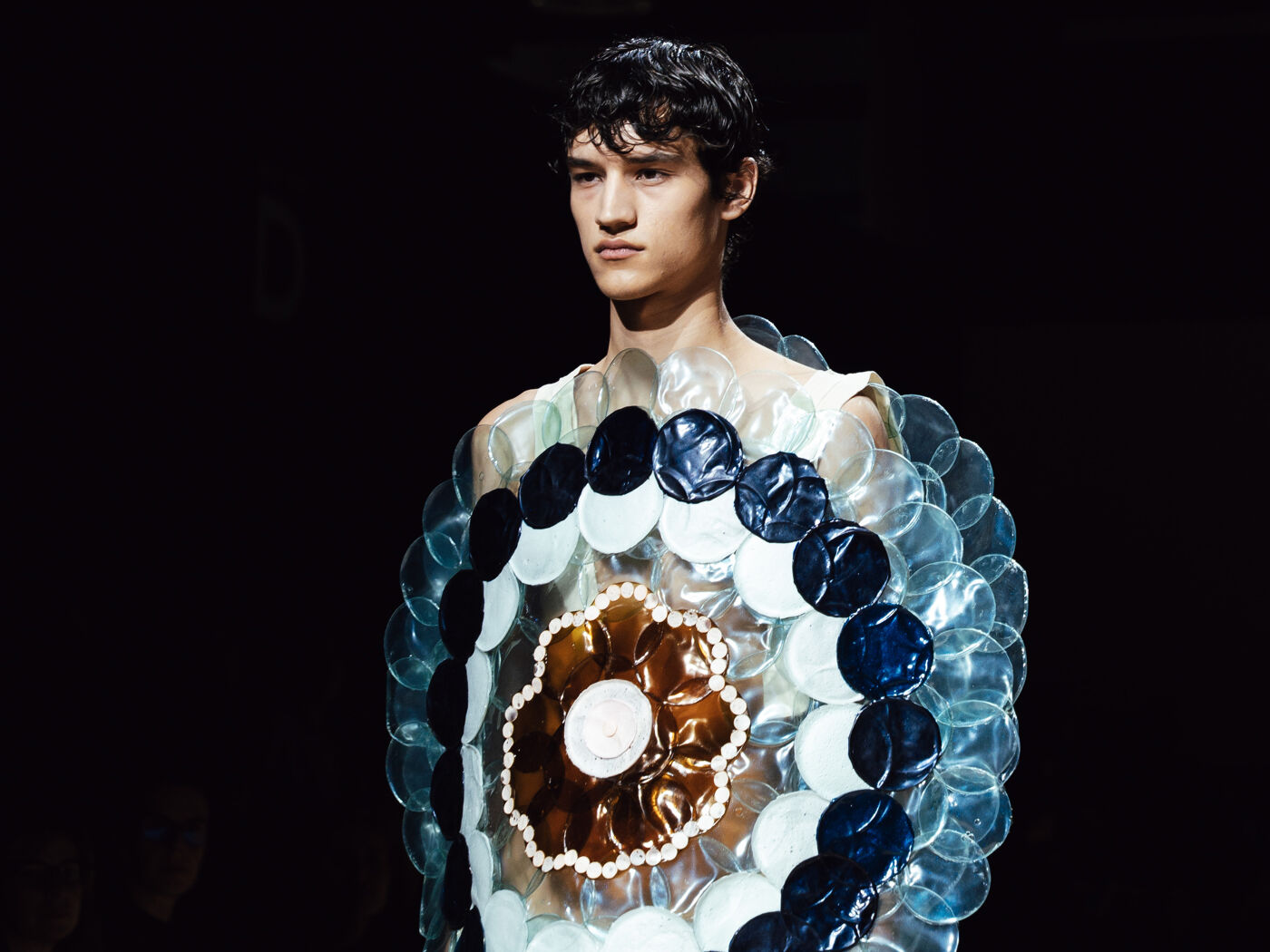
The magic of Caducifolium lies in its material honesty: hundreds of circular modules produced from a living recipe based on natural compounds, water, and glycerin. This biomaterial formula generates structure, volume, and pattern through accumulation. The pieces are not closed objects but evolving organisms that react to their environment, age, and can ultimately be remelted or returned to the earth as nutrients. "Caducifolium is born and ages. But it does not die", Laia reminds us.
On the runway, with the circle as its protagonist, the collection unfolded a vibrant visual universe where craft and design entered into dialogue with the futurism of the 1960s, the geometry of Kusama's Op Art, and the material experimentation of labels like Coperni.
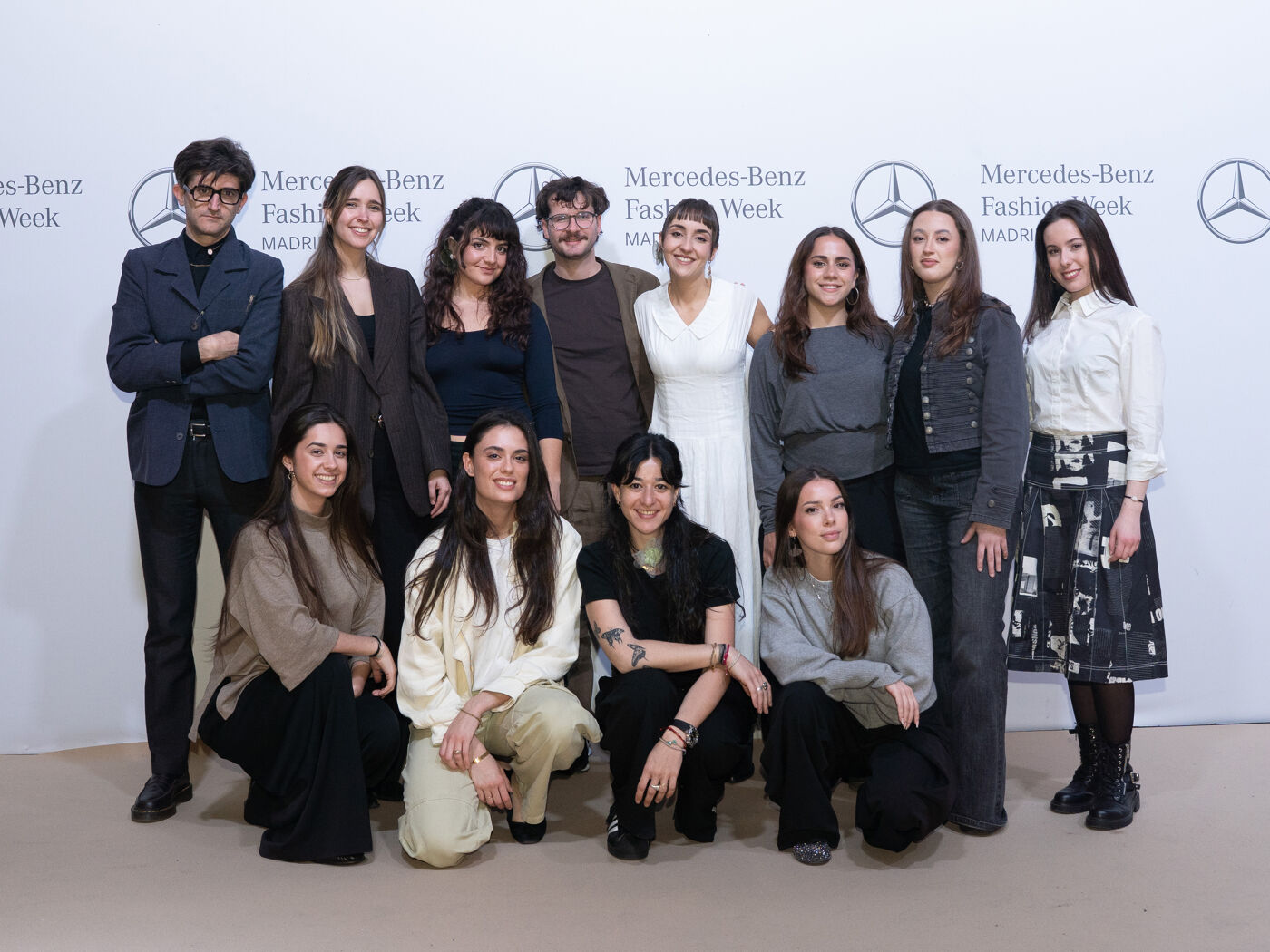
The show stood out not only for the garments, but for the network of collaborators — all young talent — who made it possible. Sustainable footwear brand SAYE partnered with Caducifolium, completing the circle of ecological coherence. Artist medasawa (Carmen Lucía) accompanied the models with an exclusive live experimental music set. Nerea Spara and Raúl Villaverde, handling photography and videography respectively, were on hand to capture every stage of the event.
The communications team responsible for the brand's strategic management — made up of students Adriana Batlle, Carla del Castillo, Julieta Harvey, Lioba Freixas, Lluna Codina, Marta Orenga, Noel Pons, Paula Biel, Virginia Crespo, and Valeria Boetsch, and coordinated by faculty member Dani Cantó — showed that the new fashion is, above all, a collective effort.
Far from presenting itself as a definitive solution, Caducifolium stands as an open question: what happens when fashion stops producing objects and starts producing systems? The collection's organism remains alive and in motion. Following its impact in Madrid, the project will continue its journey with a space in the Spain Gallery showroom, in the Open Area of 080 Barcelona Fashion. A new stage where the brand promises to unveil the next evolutionary phase of its biomaterials.
Images: Nerea Spara.